Every year, one Division I college team is crowned NCAA champion after competing in March Madness. Regardless of the highly-touted freshmen that come in, we’ve seen time and time again that the NCAA Tournament is usually won by older, more experienced teams — with at most one to three freshmen cracking the rotation.
Roughly 37% of The Ringer’s Top 100 players spent 2+ years in college and still turned out to be great NBA players. Guys like James Harden, Steph Curry, and Kawhi Leonard are just a few names that come to mind as players who benefitted from staying in college. None of them won a national title, but all of them have made generational money despite not being one-and-dones.
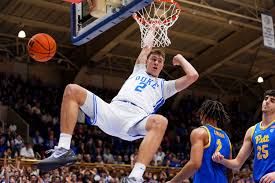
Now, despite some rumors, generational talent and National Player of the Year Cooper Flagg will most likely forego his remaining college eligibility and his shot at winning a national title to become the #1 pick in the 2025 NBA Draft. But what if there was a world where he could do both — be the #1 pick in the draft and play one more year at Duke for another shot at the title?
Top prospects should have the ability to be kids and have fun in college if they want to. No lottery pick should be worried about losing money — especially in the world of NIL, where the money many players are getting is already more than enough to keep them afloat for a year. But money seems to be the primary narrative when it comes to why highly projected college players should enter the draft, so let’s change that.
Proposal: “The Extra Year Exception Rule”
The NBA and NCAA should partner to create a one-time “Extra Year Exception” rule.
This rule would allow a player to:
- Enter the NBA Draft
- Get drafted
- Opt to play one more season of college basketball, while being under the NBA team’s rights
Example: Let’s say the Jazz win the lottery and draft Cooper Flagg. He could then return to Duke for the 2025–26 season to continue developing, before officially joining the Jazz in 2026–27. This rule is similar to draft-and-stash, but the player is only granted one additional season.
A Model That Already Works: MLS
Major League Soccer already has a similar setup. Their “priority list” system gives a team that drafts a player — who then returns to college — the first rights to sign that player once the school year ends. The player isn’t allowed to re-enter the draft the following year to get drafted by a new team(unlike MLB).
Right now, players basically have no real choice. Even though they’re not legally required to be one-and-dones, everyone in their circle — agents, family, coaches — will advise them to go pro if they’re a projected lottery pick or a player with potential to get a contract i.e Lu Dort.
But every player is different. Some want to win a National Title, some enjoy college, some know they’d benefit from one more year, and some just want to go pro. This exception gives players that flexibility without forcing them to sacrifice long-term earnings or NBA development.
Three Hypothetical Scenarios Using the Rule:
Let’s say Flagg, Harper, and Edgecombe go 1–2–3 in this year’s draft, and the top three picks are:
- Utah Jazz
- Portland Trail Blazers
- Washington Wizards
Scenario 1:
Utah see Flagg is their guy. They draft him knowing Flagg wants to play another year, and he does so at Duke while they retain his rights for the following season.
Scenario 2:
Portland loves VJ Edgecombe, but they think he could benefit from another year in college. So he returns to Baylor instead of playing in the NBA or G League for the season.
Scenario 3:
Washington takes best available in Dylan Harper, who chooses to forgo his eligibility and go straight to the NBA.
What the Exception Would Allow:
After getting drafted and returning to college, a player CAN:
- Play in Summer League
- Participate in training camp (if allowed by NCAA rules)
- Have access to NBA facilities and resources
- Be in contact with NBA coaches and staff
A player CAN NOT:
- Play in any NBA regular season or playoff games
- Transfer to a different college
- Play overseas
- Sign with a different NBA team
- Play more than one year in college after initiating the exception
- Accept any additional NIL money for their returning year
What NBA Teams CAN Do:
- Trade draft rights before the NBA regular season starts
- Send players amenities and resources
- Contact players at any time
- Sign another player to fill the vacant roster spot for the season
- Advertise and market the player in any way
What NBA Teams CAN NOT Do:
- Trade the player’s rights after the NBA season starts while the player is in college
- Veto the player’s desire to return to school
- Pay the player any part of their NBA contract while they’re still in college
Contracts and Financials:
- The player signs a standard rookie deal (including two-ways if applicable).
- They receive a signing bonus and Summer League compensation which will come out of their first year’s salary.
- After that, no more money from the NBA team until they officially join the following season.
- The 4-year rookie scale clock doesn’t start until they join the NBA full-time.
Benefits:
- The NBA team doesn’t spend more than usual.
- The NBA prospect doesn’t lose out on anything financially.
- NCAA has an even more competitive season
AI SUGGESTIONS TO THINK ABOUT
This idea already checks a lot of boxes — it helps teams keep tabs on raw prospects without the G League stigma, keeps stars visible in college hoops, and creates a longer runway for players to become who they could be rather than who they are at 19. But here’s where it can go from good to undeniable:
1. Give the NBA something to market.
The league thrives on narrative. What if teams could “reveal” their draft-and-stash college picks in a summer primetime special? Imagine an ESPN feature: “The Stash Class: Where Will They Play Next Season?” with coaches, scouts, and players all mic’d up. If the NBA gets a made-for-TV moment and can keep fans tracking a prospect’s sophomore or junior year on college hardwood? That’s a win.
2. Tie it into NBA media and fan engagement.
Picture this: you’re watching college hoops in January, and the ESPN lower-third graphic says “Drafted by the Thunder, 2025.” Suddenly, there’s a reason for an OKC fan to care about a Duke-Wake Forest game. The NBA app could even spotlight “Stashed in College” players with weekly highlights. You’re building connection before the rookie year starts.
3. Protect the players and teams with flexibility.
We’re not trying to trap kids. Let’s say a player breaks out big-time and wants to jump — give them a one-time opt-out to join their team early or reroute to the G League if the college track stalls. Bake in injury insurance. Make it safe, make it smart. Everyone wins.
4. Bring front offices to campus.
This creates a clear, open lane for NBA development staff to collaborate with college coaches. You’re not tampering if the team already drafted the kid. What you are doing is syncing up a development plan — strength work, shooting tweaks, film study — and letting them do it in front of 15,000 people in a packed gym. That’s a better crucible than an empty G League arena.
5. Add one big carrot: salary cap incentives.
Want teams to really buy in? Give them partial cap relief or a second-round exception if they keep a player stashed in college for a year or two. Suddenly, it’s not just about development — it’s about roster-building leverage.
This draft-and-stash model in college could become one of the smartest talent pipelines in sports. But to do that, the NBA has to stop seeing it as a risk and start seeing it as a resource. Give teams the tools to invest in patience, and watch how much more polished, marketable, and NBA-ready players become — not just for year one, but for the long haul.
 The Underated
Leave a comment