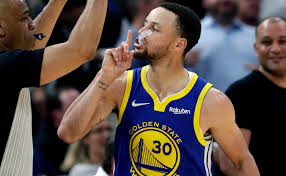
The end of the NBA 2024–25 season is slated for the end of this week, marking the close of an exciting yet unpredictable year. Since it feels like ages ago now, let’s look back at the start of this year’s playoffs, where we saw teams like the Denver Nuggets taking the Thunder to seven games, or the Warriors taking down the No. 2-seeded Houston Rockets.
Dominated by stars, we witnessed impactful plays across several series, ultimately leading to a Finals where a seventh straight new champion will be crowned. But that’s not all. Though stars like Brunson, Haliburton, or Jokic (to name a few) receive the majority of the praise for their teams’ success, there have been countless role players who—while often overlooked by mainstream media—crucially executed their roles to impact winning.
I’ve compiled a list of seven role players who, at some point during these playoffs, positively contributed to their teams to the point where I considered them my “X-Factors.” To be selected means they not only made a visible impact through the eye test while watching games, but also statistically contributed in a meaningful way (relative to other players at their position).
All statistics were collected through basketball reference and Cleaning the Glass for the playoffs only.
Steven Adams
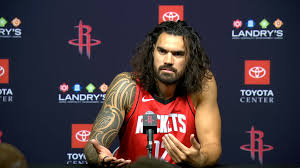
If you want to see clear visual impact on a game, watch Steven Adams play against the Warriors. Averaging 6.6 rebounds and 3.3 offensive rebounds, it’s understandable why the Warriors struggled to contain him.
His strength, rebounding, and blocking ability made his presence known, and are part of the reason he recently received an extension. It felt like every possession resulted in a Steven Adams something—whether a block or a rebound.
Though he wasn’t much of a paint offensive threat, his +15 plus-minus average through Games 4–6 showed that he didn’t need to score to make an impact. In Game 4, he finished with 4 blocks, and came up with 3 in Game 6, putting him in the 85th percentile for block percentage while also ranking in the 97th percentile for foul percentage—displaying his defensive discipline.
And when it did come down to scoring down low, Steven did a solid job of using his touch to get into the 96th percentile for two-point percentage at 65%.
OG Anonouby
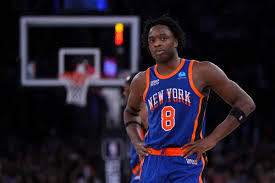
Though there have been mixed reviews on OG’s playoff performance, I believe he is becoming slightly undervalued by many fans. While playing behind two proficient scorers, OG still managed to score 16 points a game—and 18 in his last series.
I can agree OG may have had an opportunity to shoot more late in the playoffs, with KAT barely being able to finish games in the Indiana series, but not only is that not his game, it still wouldn’t make sense when you have Mikal, Jalen, and a whole lot of defense to play.
OG had some solid defensive plays that were not as loud as Mikal Bridges’ steals in back-to-back Celtics games, but there is a reason he is respected as one of the better two-way players in the NBA. OG tallied in the 87th percentile in block percentage and 83rd in steal percentage, while being the primary wing stopper for the Knicks.
Alex Caruso

Earlier in the playoffs, Thunder head coach Mike Daigneault highlighted the importance of finding the “right” veterans to surround a young team. Alex Caruso, in the playoffs, has been the epitome of the right veteran, as his IQ, defensive prowess, and increased comfort off the dribble have worked wonders for this Thunder team.
Caruso was a major factor in OKC’s series victory against the Nuggets, having the primary responsibility of guarding Jokic in the final two games of the series—and even posting a +40 plus-minus (fairly high, wouldn’t you say?).
Though his 10 points, 3 rebounds, and 2 assists per game don’t necessarily jump off the page, his 2 steals per game do. Not to mention, Alex is shooting 43% from three and 50% from non-corner threes (he loves the wing).
He’s in the 91st percentile in effective field goal percentage and the 100th percentile in steal percentage, statistically backing his impact on both the offensive and defensive sides of the ball. His two 20-point games have been timely, and last game’s poise, in particular, is arguably the reason why the Thunder won.
Aaron Gordon
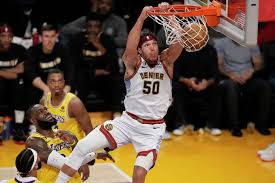
Aaron Gordon is the kind of player every team hopes to acquire: a former high-usage player who fits in well as a third or even fourth option. Averaging 16 points, 8 rebounds, and 4 offensive rebounds a game, the stats only scratch the surface of Aaron’s production.
His athleticism and feel for the game make him a threat in the dunker spot and on the boards, averaging 9 rebounds during the OKC series.
Gordon’s ability to space the floor didn’t help his opponents, as his 43.5 percent clip made it hard to gamble with the risk of him shooting the three. Having played with Nikola Jokic for so long also brings into play his smart positioning.
Seemingly always in the right place at the right time around the rim, Aaron created easy decisions for Nikola or Jamal Murray to dump down the ball for what we like to call easy buckets. What stood out most of all— for better or for worse—was his drive to play in an elimination game with a torn hamstring.
Though it may not have helped the team in that moment, his commitment to the team and to winning that existed in that game was the same drive he had through the other 13 games.
Davion Mitchell
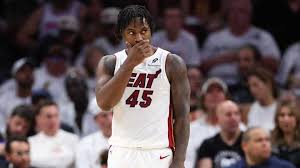
Ever since Davion’s arrival in Miami midway through this past season, he has started to look more and more like a quality building block in the Heat’s future. Though the series itself wasn’t great for the team collectively, Davion was able to average 15 points and 6.3 assists per game, while ranking in the 93rd percentile for assist-to-usage ratio.
What was encouraging was his 72.7 eFG%, after shooting 64.7% from two and 57.1% from three through four games.
Known for his defense, Davion’s ability to not only be a primary ball handler but also space the floor at times allowed Tyler Herro to play more of his game, rather than having to initiate plays. With Davion’s defensive ability, there is something interesting brewing in Miami—if the end of this season is any indication of how he’ll play next year.
Dennis Schröder
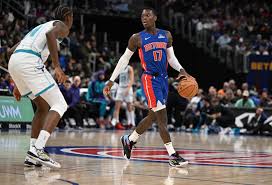
I’m not sure if Dennis will want to stay in a backup point guard role long term, but man, is he good at it. Playing behind Cade Cunningham, Dennis was able to score the ball with ease and efficiency in his limited minutes. His comfort on the ball has allowed Cade to play off the ball at times, more as a wing.
Regardless of who he was playing with, Dennis was able to show that his Brooklyn phase—and even his Atlanta days—are still in him. Shooting 48% from three, with games of 20 points on 60% FG and 18 points on 67% FG, speaks for itself.
Not to mention, Dennis ranked in the 93rd percentile in steal percentage, mainly due to his defensive playmaking—a player who has a feel for when to be where defensively, even if not the best defensive player athletically. Dennis is in for an interesting decision this
Max Strus
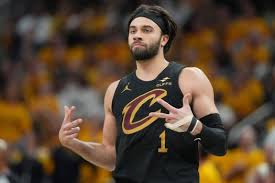
Max got a lot of hate for his underwhelming shooting performance in an elimination game against the Indiana Pacers. Despite that, people have glossed over his production and clear improvements to his game. In Games 1 through 4 of the Pacers series, Max averaged 15 points and shot 40% from three, and the six threes he missed in Game 5 were, for the most part, great shots for him that just didn’t fall.
Aside from his shooting inconsistency, he should get some credit for doing things outside of just shooting the basketball, as he averaged 7 rebounds and 4 assists in the Eastern Conference Semis—clearly trying to be in the right place for his teammates. While watching Max play, you can see he’s a lot more comfortable playing in a pick-and-roll at times or making the proper pass as a sequence develops.
He did sit in the 91st percentile in assist-to-usage ratio, and though Game 5 didn’t go his way, his +34 plus-minus in Game 4 against the Heat should somewhat show the value he can bring while on the court. There’s a reason this organization trusts him, and his impact was seen—even if not acknowledged.
 The Underated
Leave a comment